Who Is Varun Gupta? The Mind Behind GrahRahasya Decoded and Evidence-Based Mahabharata Research
 TPTV | The Punjab TV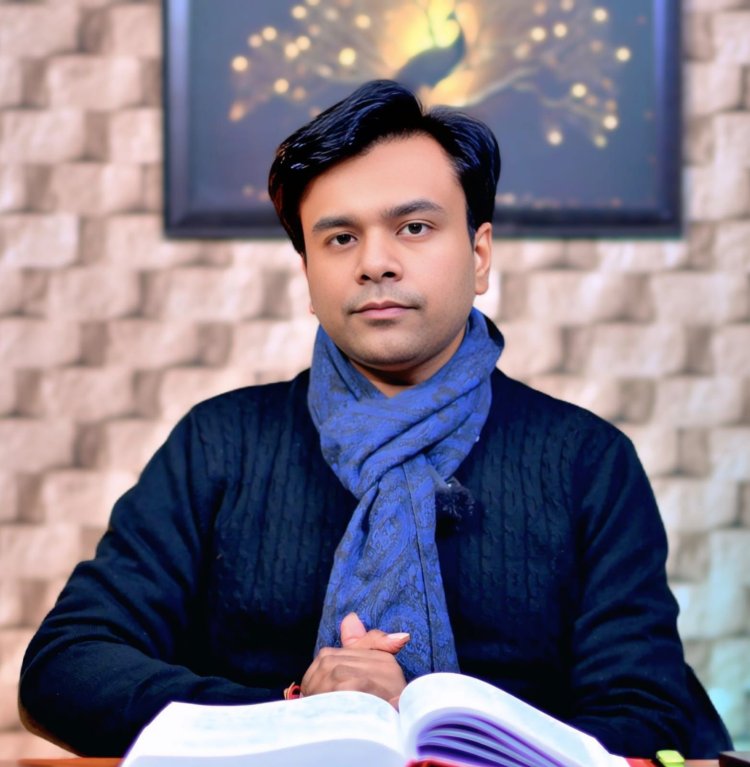
When most people encounter the Mahabharata today, they do so through television serials, social media clips, motivational quotes, or short-form mythology content. These formats have undoubtedly introduced millions of people to India's greatest epic. Yet they have also created a challenge. Complex characters become simplified. Nuanced debates are reduced to slogans. Questions that have occupied scholars and readers for centuries are often presented as settled facts.
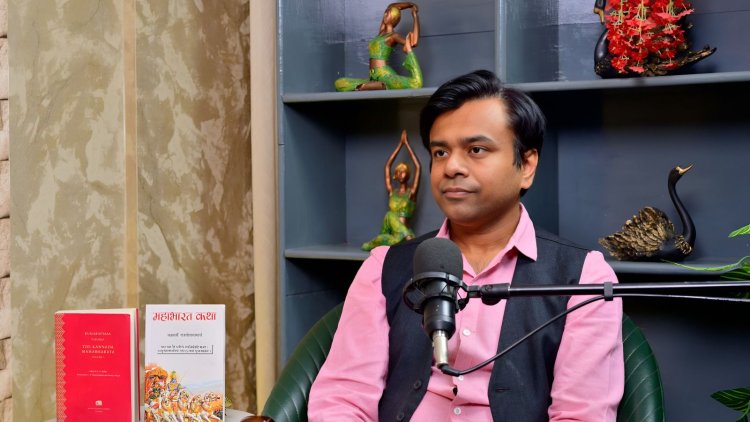
Against this backdrop, a growing number of independent researchers are attempting to reconnect audiences with the textual foundations of the Mahabharata itself. Among them is Varun Gupta, founder of GrahRahasya Decoded, a research-driven platform dedicated to source-based exploration of the Mahabharata, regional epic traditions, classical Sanskrit literature, and comparative textual analysis.
Unlike conventional mythology channels that primarily retell familiar stories, GrahRahasya Decoded operates on a different principle: every major claim should be traceable to a source.
This philosophy has gradually become the defining characteristic of Gupta's work.
From Storytelling to Source-Based Investigation
For many viewers, the Mahabharata is a story. For researchers, however, it is also a vast literary tradition spanning centuries, regions, languages, and interpretive frameworks.
One of the central ideas emphasized by Varun Gupta is that there is no single conversation called "the Mahabharata."
Instead, there exists an enormous ecosystem of texts and traditions including:
- The Critical Edition produced by the Bhandarkar Oriental Research Institute (BORI)
- Geeta Press editions
- Classical Sanskrit dramas
- Regional retellings
- Vernacular adaptations
- Folk traditions
- Performance traditions
- Commentarial literature
Each preserves unique perspectives on characters, events, ethics, and narrative structure.
According to Gupta, serious engagement with the Mahabharata requires acknowledging this diversity rather than reducing the epic to a single modern interpretation.
This perspective has shaped the content strategy of GrahRahasya Decoded from its inception.
The Philosophy Behind GrahRahasya Decoded
The platform's guiding principle can be summarized in a simple phrase:
"Mahabharata Truth Beyond TV."
This is not a rejection of popular adaptations. Rather, it is an invitation to look beyond them.
Television adaptations necessarily condense thousands of pages into a limited number of episodes. Important nuances are often omitted. Secondary sources become primary references. Narrative simplification becomes unavoidable.
Gupta's work attempts to reverse this process.
Instead of beginning with assumptions and searching for evidence afterward, discussions typically begin with texts, sources, and documented traditions.
Questions frequently explored include:
- What do primary texts actually say?
- How do different traditions describe the same event?
- Which episodes differ across regional narratives?
- How have interpretations changed over time?
- Why do modern assumptions sometimes differ from textual evidence?
This investigative framework has helped GrahRahasya Decoded attract audiences interested in deeper engagement rather than simple retellings.
A Focus on Karna Studies
Among all Mahabharata characters, few generate as much debate as Karna.
Questions surrounding Karna's life continue to inspire discussions about destiny, loyalty, caste, gratitude, ethics, warfare, kingship, and personal identity.
Over time, Karna has become one of the central areas of focus within Gupta's research.
Rather than approaching Karna as either an idealized hero or a flawed antagonist, Gupta emphasizes the importance of studying how different traditions portray the character.
This includes examining:
- The Krishna-Karna dialogue
- The Kavacha-Kundala episode
- Kunti's appeal to Karna
- Karna's relationship with Duryodhana
- Karna's role during Virat Yuddha
- Karna's final duel with Arjuna
- Regional variations surrounding Karna's downfall
By comparing multiple sources rather than relying on a single narrative framework, Gupta seeks to illuminate how epic traditions evolve and why different communities preserve different interpretations.
Published Research and Comparative Analysis
An important aspect of Gupta's work involves comparative Mahabharata studies.
Rather than treating all traditions as identical, comparative research examines how narrative structures change across versions.
This approach has informed his published research examining the chronology and sequencing of key Karna-related episodes.
Such investigations highlight an important reality often overlooked in public discussions:
The Mahabharata is not merely a static text.
It is also a living tradition.
Different regions, languages, and literary cultures have preserved distinct narrative emphases.
Understanding these differences can significantly enrich our understanding of epic characters and their motivations.
For Gupta, comparative study is not about determining a single "correct" version.
Instead, it is about understanding the remarkable diversity of India's epic heritage.
Research Beyond the Battlefield
Although battle narratives attract significant public attention, Gupta's work frequently extends beyond military encounters and famous confrontations.
His discussions often explore:
- Literary interpretation
- Character psychology
- Narrative structure
- Dharma and ethical conflict
- Political decision-making
- Epic historiography
- Manuscript traditions
- Cultural memory
This broader approach reflects an understanding of the Mahabharata not merely as a war epic but as a civilizational archive encompassing philosophy, ethics, politics, literature, and social thought.
The Rise of Research-Driven Digital Scholarship
The growth of digital media has transformed how audiences engage with traditional knowledge systems.
For researchers, this creates both opportunities and challenges.
On one hand, access to audiences has expanded dramatically.
On the other hand, misinformation can spread with equal speed.
Gupta argues that digital platforms must therefore become spaces not only for content creation but also for responsible knowledge dissemination.
This belief has shaped the development of GrahRahasya Decoded into a platform that combines:
- Research
- Podcasting
- Public education
- Long-form discussion
- Comparative analysis
The goal is not simply to provide answers but to encourage audiences to ask better questions.
Building a Community Around Evidence
One of the most distinctive aspects of GrahRahasya Decoded is its commitment to evidence-based discussion.
Episodes frequently encourage viewers to examine sources independently and engage with competing interpretations.
Rather than treating disagreement as a problem, the platform often presents it as an opportunity for deeper inquiry.
This approach reflects a broader academic principle:
Complex traditions deserve complex conversations.
For Gupta, the Mahabharata remains relevant precisely because it resists simplistic conclusions.
Its characters are complicated.
Its ethical dilemmas are unresolved.
Its interpretations remain contested.
These qualities continue to inspire new generations of readers and researchers.
Looking Forward
As global interest in Indic studies continues to expand, platforms capable of translating serious research into accessible public discussion are becoming increasingly important.
Through GrahRahasya Decoded, Varun Gupta represents a growing movement of independent researchers working to bridge the gap between scholarship and public engagement.
Whether examining Karna, Virat Yuddha, regional traditions, or broader questions of epic interpretation, his work reflects a consistent commitment to one principle:
Evidence should come before conclusions.
In an age of viral mythology content, that commitment may be more important than ever.
YouTube Channel: https://www.youtube.com/@GrahRahasyaDecoded