Beyond the Temple: Shree Ram Jewellers on Crafting Silver Shringar for Household Deities
 shootupmedia1@gmail.com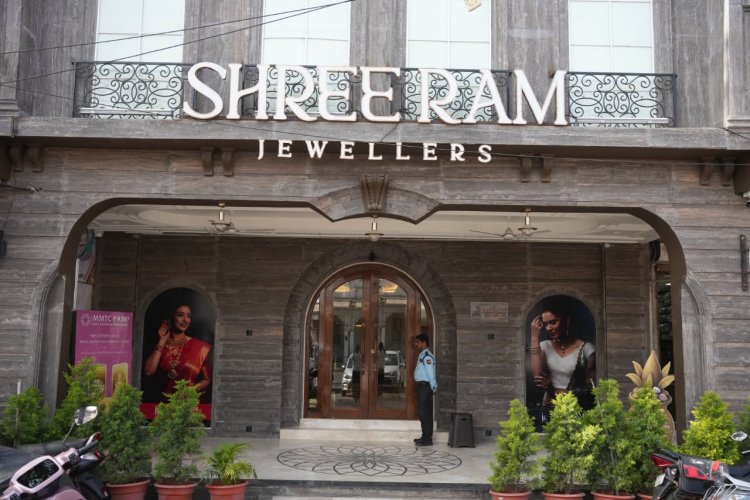
While its reputation rests largely on silverwork made for Baba Mahakal at Ujjain's Mahakaleshwar Jyotirlinga temple, Shree Ram Jewellers says a meaningful part of its business involves a very different kind of client: everyday devotees commissioning handcrafted silver shringar for the deities they worship at home.
According to the store, customers come from various parts of the country seeking silver adornments for their personal or family deities, modeled on the same handcrafted techniques the store uses for its temple-facing commissions. That overlap — the same craftsmanship claims, the same handmade, no-machine production process, applied to both a major Jyotirlinga temple's ceremonial needs and a household shrine — is central to how Shree Ram Jewellers positions its broader business beyond its most visible temple association.
Scaling Temple Craftsmanship to Household Worship
Household deity idols vary considerably in size and setting compared to a major temple's presiding deity, meaning silverwork originally conceived at the scale of pieces like the Mukut or Chandrama made for Mahakal would need adaptation — different proportions, different mounting considerations — for a smaller home shrine. Shree Ram Jewellers has not detailed publicly how it approaches this kind of scaling for household commissions, though its stated willingness to take on both temple and personal orders suggests some degree of established process for adapting its core designs.
Why Devotees Seek Out Temple-Associated Craftsmen
Devotees commissioning silver shringar for a household deity may be drawn specifically to a craftsman associated with a major temple like Mahakaleshwar, since that association can carry an implicit assurance of ritual-appropriate design knowledge — familiarity with deity iconography, festival-specific aesthetic expectations, and the functional requirements of ceremonial pieces — that a general jewellery retailer might not offer to the same degree. This dynamic reflects a broader pattern in devotional craft economies, where reputation built through temple association extends into private commissions from customers seeking a similar standard of ritual authenticity for their own household worship.
Regional variation in household worship practices across India also means a craftsman's approach to a household commission may need to account for differing regional or sectarian conventions around deity adornment, rather than assuming every customer's expectations mirror the specific traditions observed at Mahakaleshwar itself.
For devotees considering a household deity commission, requesting to see examples of the store's prior work for personal clients — distinct from its more publicized temple commissions — offers a more direct sense of how its craftsmanship translates to the smaller scale of home shrine worship.
Pricing for household commissions likely differs meaningfully from temple-scale work given differences in material volume and design complexity, though the store has not published a pricing structure publicly, meaning prospective customers would need to inquire directly about cost for a specific piece rather than assuming pricing scales in a simple, predictable way from its more prominently featured temple work.
Turnaround time is another practical detail worth clarifying for a household commission, since a fully handmade piece — consistent with the store's stated no-machine production process — likely takes longer to complete than a comparable machine-assisted item from a general jewellery retailer, a tradeoff devotees seeking ritual-appropriate authenticity may consider worthwhile.